
Voltage Tester With Proving Unit: The Complete 2026 Guide for UK Electricians and DIYers
Everything you need to know about choosing, using, and maintaining a voltage tester with proving unit — from safety regulations to real-world testing, with honest recommendations based on hands-on experience.
What Is a Voltage Tester With Proving Unit?
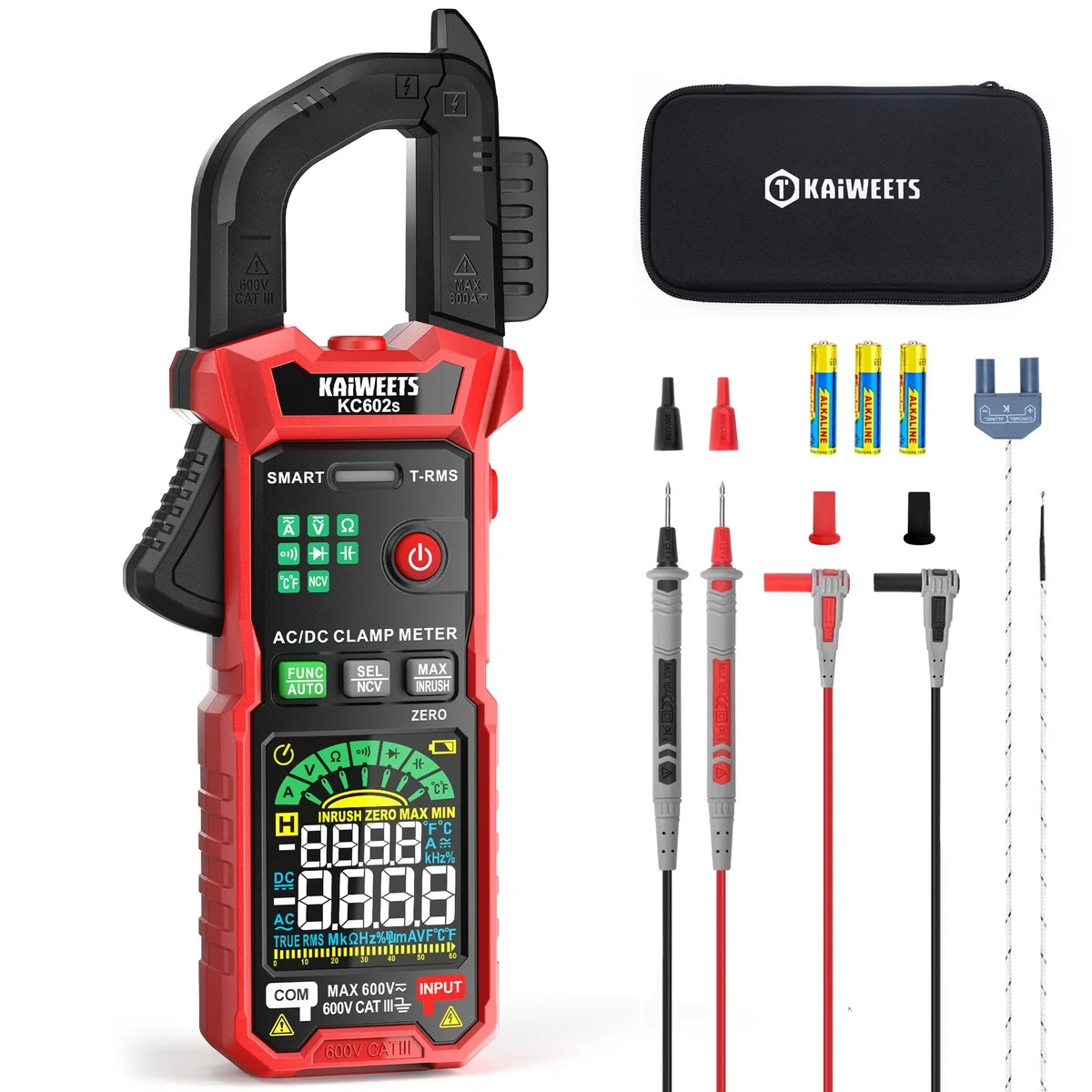
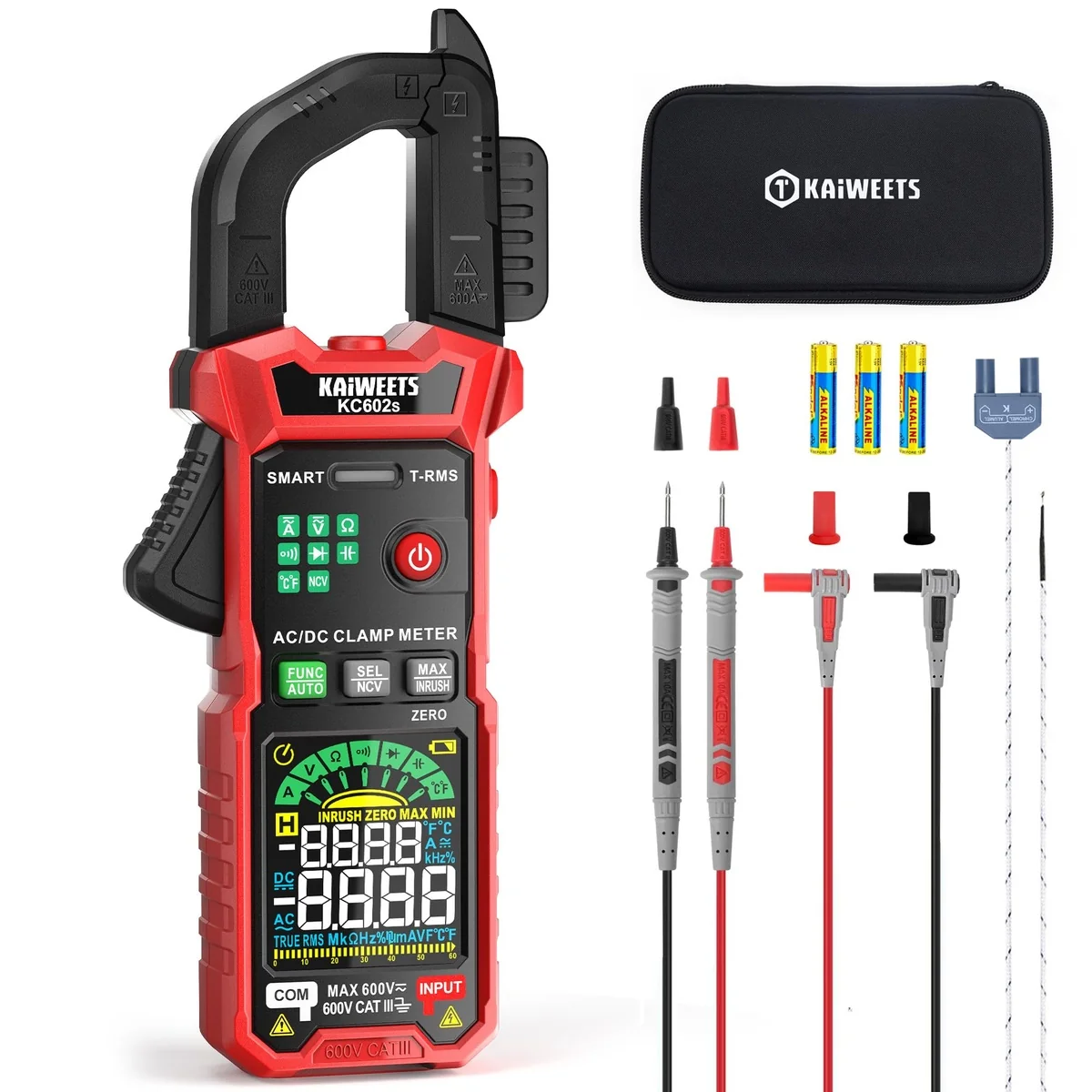
Many UK sparkies pair a two-pole voltage tester with a proving unit for the mandatory prove-test-prove sequence. For broader measurement tasks, the KAIWEETS KC602S clamp meter adds AC/DC current, NCV, and continuity in one unit.
A voltage tester with proving unit is a two-part safety system that confirms your tester is working correctly before and after you check a circuit. Simple as that. The proving unit generates a known voltage (typically 50V, 100V, or 230V) so you can verify your tester gives an accurate reading — not a false negative that could get someone killed.
I've been working around electrical testing gear for years now, and honestly, the number of people who skip the proving step still surprises me. Here in Belfast, I've chatted with local electricians who've seen testers fail silently. No warning, no beep — just a dead instrument giving a false "safe" reading on a live circuit.
Key fact: The Health & Safety Executive (HSE) recommends a "test before touch" procedure: prove the tester works, test the circuit, then prove the tester again. This three-step process — known as prove-test-prove — is mandated under GS38 guidance for electrical work in the UK.
Without a proving unit, you're essentially trusting that your electrical voltage tester hasn't developed a fault since you last used it. That's a gamble no professional should take.
Why Proving Units Are Non-Negotiable for Safe Working

Proving units exist because voltage testers can fail without any visible sign. Flat batteries, damaged leads, internal faults — all can produce a zero reading on a live 230V supply. The consequences? Fatal.
Between 2020 and 2025, the HSE recorded an average of 12 electrical fatalities per year in UK workplaces. Many incidents trace back to inadequate testing procedures. A decent voltage tester and proving unit combination costs under £150. That's cheap insurance.
GS38 Requirements
The HSE's GS38 guidance document specifies that test equipment used on electrical systems must be proved immediately before and after use. This applies to every local electrician, maintenance engineer, and competent person working on or near live conductors. It's not optional — it's the standard that gets checked during an electrical safety certificate inspection.
What Happens Without Proving?
My mate who's a sparky in East Belfast told me about a job where his colleague's tester showed dead on a distribution board that was very much alive. Turned out the fuse in the test lead had blown. If he'd used a proving unit first, he'd have caught it in seconds. That near-miss changed how their whole team works.
Types of Voltage Testers: Which One Do You Actually Need?
Not all testers do the same job. Here's a breakdown of what's available in 2026 and where each type fits.
Two-Pole Voltage Testers
The gold standard for confirming dead. These contact testers use two probes to measure voltage between conductors or between a conductor and earth. They're what GS38 was written around. A voltage and continuity tester in this category typically reads from 50V to 690V AC and includes a continuity function for checking circuit integrity.
Non-Contact Voltage Detectors (NCVDs)
A non-contact voltage tester detects the electromagnetic field around a live conductor without touching it. Brilliant for quick checks — is this cable live before I start cutting? But here's the thing: they can't confirm dead. They're a first-line indicator only.
The best non-contact voltage tester options from Fluke and KAIWEETS will detect AC from 90V to 1000V at distances of 10–25mm. A Fluke non-contact voltage tester like the 1AC-II is popular on UK sites, but there are solid alternatives at half the price.
Screwdriver With Voltage Tester
Those neon screwdriver testers you see in every toolbox? Look, they have their place for a quick "is it live?" check on a socket. But they're unreliable, can give false readings through capacitive coupling, and no professional should rely on them for safe isolation confirmation. I'd never recommend one as your primary tool., a favourite among Britain’s tradespeople
Continuity Testers
A dedicated continuity tester sends a small current through a circuit to verify an unbroken path. Most modern voltage continuity testers combine both functions — you get voltage detection and continuity in one unit. That's what you want for efficiency on site.
How to Use a Voltage Tester: The Prove-Test-Prove Method
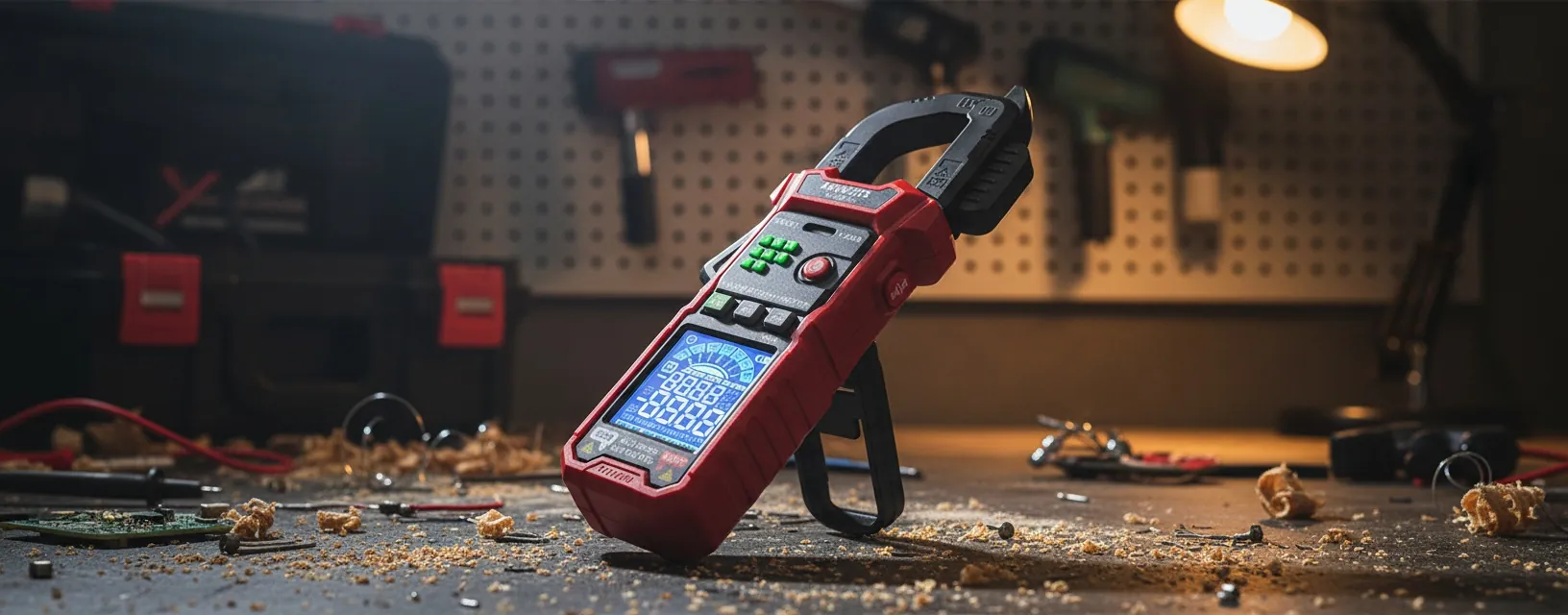
This is the correct procedure every time. No shortcuts.
Step 1: Prove Your Tester Works
Connect your two-pole tester to the proving unit. You should get a clear indication — LED, LCD reading, or audible tone — confirming the tester detects the known voltage. If it doesn't respond, your tester is faulty. Stop. Replace it.
Step 2: Test the Circuit
With your tester confirmed working, test between all conductors: line-neutral, line-earth, neutral-earth. A dead circuit should read 0V on all combinations. Any reading above 25V AC means the circuit is still live.
Step 3: Prove Again
Immediately after testing, reconnect to your proving unit. This confirms the tester didn't fail during the test. If it reads correctly — sorted, you're safe to work. If it doesn't? Assume the circuit is live until you can retest with a known-good instrument.
Pro tip: Keep your proving unit in the same case as your tester. If it's in the van while you're three floors up, you won't bother going back for it. Human nature, isn't it? Make the safe choice the easy choice.
For those using a non-contact voltage detector tester as a preliminary check, remember: it supplements the two-pole test, never replaces it. Use the NCVD to identify which circuits might be live, then confirm with your contact tester and proving unit.
Voltage Tester With Proving Unit: 2026 Model Comparison
Here's how the main options stack up this spring. I've included price points from UK suppliers as of June 2026.
| Model | Type | Voltage Range | Proving Unit Included | Continuity | Approx. Price (GBP) | CAT Rating |
|---|---|---|---|---|---|---|
| Fluke T150 | Two-pole | 6V–690V AC/DC | Sold separately (Fluke PRV240) | Yes | £185 (tester) + £95 (prover) | CAT IV 600V |
| Martindale VIPD150 | Two-pole + proving unit kit | 50V–690V AC/DC | Yes (PD690) | Yes | £145 (kit) | CAT IV 600V |
| Kewtech KT1780 | Two-pole + proving unit kit | 50V–690V AC/DC | Yes (KEWPROVE3) | Yes | £130 (kit) | CAT IV 600V |
| KAIWEETS HT100 | Non-contact + contact | 12V–300V AC | No | Yes | £58.67 | CAT III 300V |
| Fluke 1AC-II | Non-contact only | 90V–1000V AC | No | No | £28 | CAT IV 1000V |
| Di-LOG DL6780 | Two-pole + proving unit kit | 50V–690V AC/DC | Yes | Yes | £120 (kit) | CAT IV 600V |
Worth the extra spend on a kit with the proving unit bundled? Absolutely. Buying separately almost always costs more, and you're less likely to "forget" the prover if it came in the same box.
Best Non-Contact Voltage Tester: When to Use One
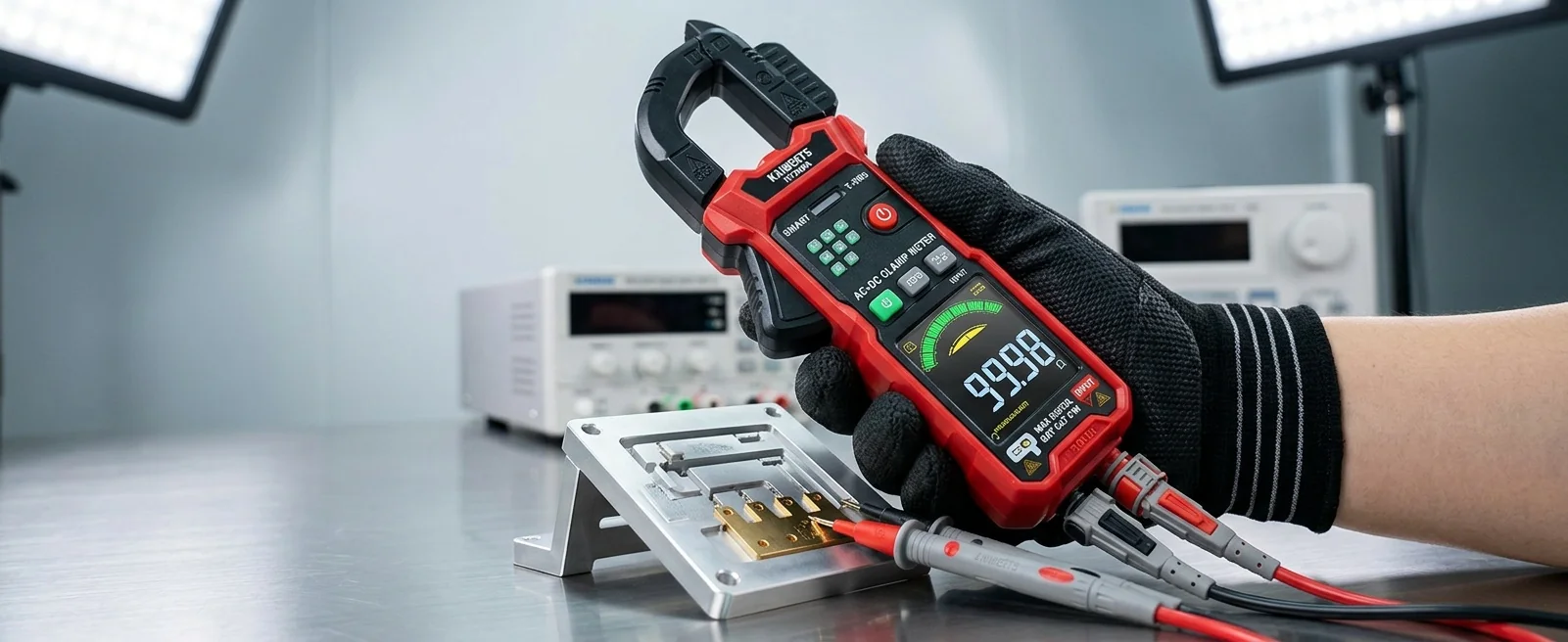
A non-contact voltage tester (or NCVD) is your first line of defence. You hold it near a cable or terminal, and it lights up or beeps if AC voltage is present. Dead simple to use, fits in a shirt pocket, runs on AAA batteries.
So what's the catch? They can't detect DC. They can give false positives near high-frequency interference. And they absolutely cannot confirm a circuit is dead for safe isolation. The British Standards Institution (BSI) is clear: NCVDs are supplementary devices, not primary test instruments.
When NCVDs Are Brilliant
- Tracing live cables behind plasterboard before drilling
- Quick identification of which breaker feeds which circuit
- Checking if outdoor lighting is energised before touching
- Initial assessment before breaking out the two-pole tester
My Honest Take
I've used both budget and premium non-contact detectors. The Fluke non-contact voltage tester is reliable but pricey for what it is. For most DIYers, the KAIWEETS options give you decent sensitivity at a fraction of the cost. That said, if you're working in noisy electrical environments — near VFDs or large motors — spend the extra on a Fluke. The filtering is noticeably better. (And yes, I learned that the hard way on a factory job in Antrim. Some lessons cost more than others.)
For a proper digital electrical tester that handles multiple measurement types, you'll want something with broader capability than a simple pen-style detector., popular across England
KAIWEETS HT100 Voltage Tester: Budget-Friendly Testing
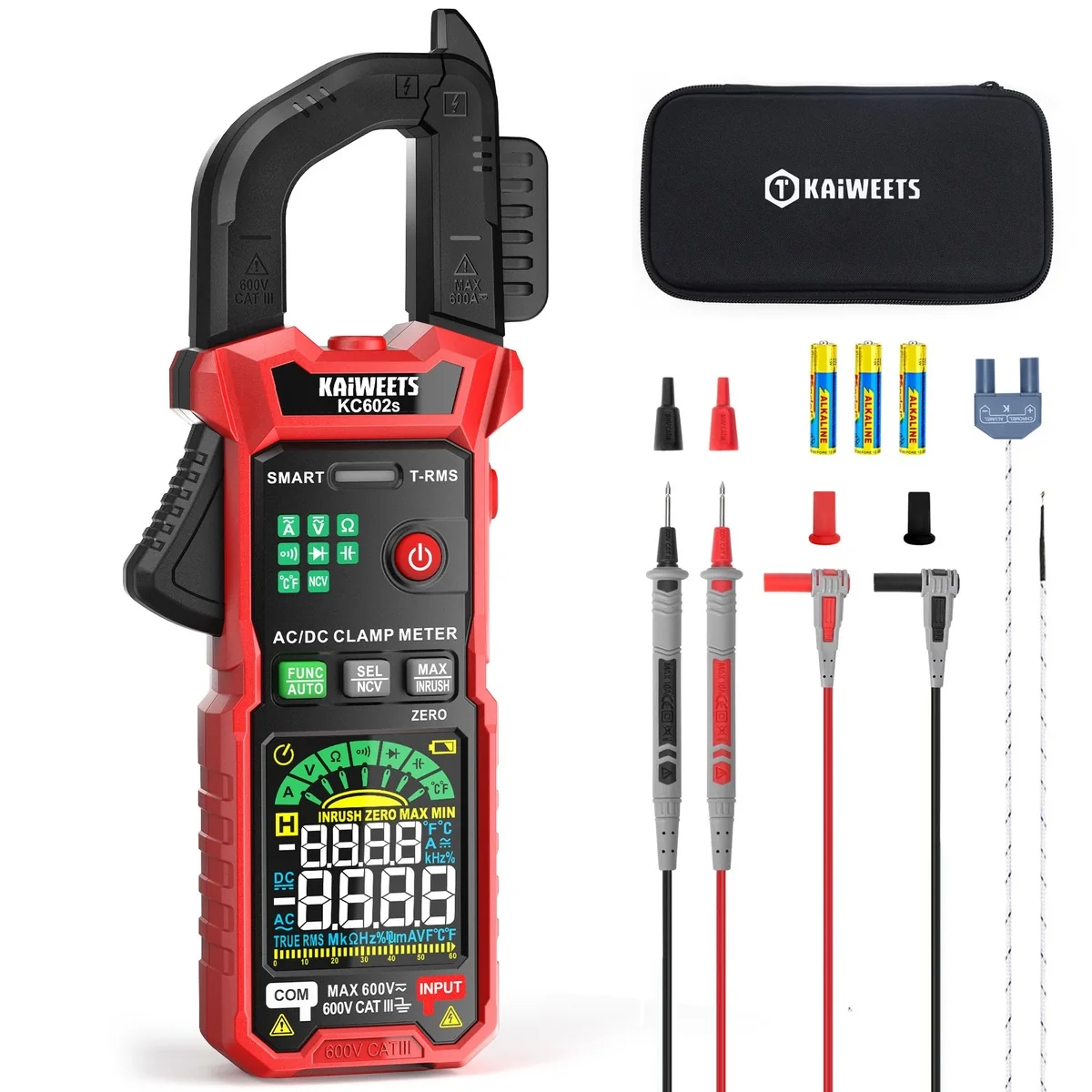
The KAIWEETS KC602S AC/DC clamp meter sits in an interesting spot. At £58.67 with free 1–3 day UK delivery, it is accessible for DIY enthusiasts and handy as a backup tool for professionals.
KAIWEETS HT100 Specs: 12V–300V AC detection range | Non-contact and contact modes | Continuity testing with audible buzzer | CAT III 300V rated | Auto power-off | LED torch built in
Is it a replacement for a proper two-pole voltage tester and proving unit? No. It's CAT III 300V, which means it's suitable for domestic socket testing but not for distribution boards or industrial panels where you need CAT IV 600V minimum. For home use though — checking a socket's live before changing a light fitting, testing continuity on an extension lead — it's bang for your buck.
To be clear, the HT100 works best as part of a broader toolkit rather than a standalone solution. Pair it with a 6000-count digital multimeter for detailed measurements, and you've got most domestic jobs covered. If you're wondering whether you need true RMS capability for home projects, we've covered that in our true RMS guide.
What I Like
- Dual-mode detection (contact and non-contact) in one tool
- Continuity buzzer is loud enough to hear on a noisy site
- Compact — fits in a back pocket
- Price point makes it a no-brainer spare
What Could Be Better
- No proving unit available for this model
- CAT III limits professional applications
- 300V maximum won't cover three-phase systems
For professional electrical work, you'll still want a dedicated two-pole electric voltage tester with a matched proving unit. But for the price? The HT100 earns its place in the toolbag. Check current availability at kaiweetsclampmeter.co.uk.
Frequently Asked Questions

Do I legally need a proving unit with my voltage tester in the UK?
While not a criminal offence to work without one, HSE guidance document GS38 strongly recommends proving units for all electrical testing. Any local electrician working under BS 7671 (18th Edition Wiring Regulations) is expected to follow prove-test-prove procedures. Insurance claims and electrical safety certificate audits will check compliance with this standard.
Can a non-contact voltage tester replace a two-pole tester?
No. A non-contact voltage detector tester can only indicate the presence of AC voltage — it cannot confirm a circuit is dead. For safe isolation, you must use a two-pole contact tester rated to at least CAT III 300V (domestic) or CAT IV 600V (distribution). NCVDs are supplementary tools only, per BSI and HSE guidance.
How often should I replace my voltage tester's proving unit?
Proving units don't have a fixed expiry date, but manufacturers recommend calibration checks every 12 months. Replace the unit if it shows physical damage, corroded contacts, or inconsistent output. Battery-powered provers should have fresh batteries before each shift. Budget £15–£30 annually for maintenance and battery replacement.
What's the difference between CAT III and CAT IV voltage testers?
CAT III (300V/600V) covers testing at distribution boards, socket outlets, and fixed wiring within buildings. CAT IV (600V) covers testing at the origin of supply — meter tails, service heads, and outdoor installations. Professional electricians need CAT IV for work at or near the incoming supply. DIYers working only on sockets and lighting can use CAT III rated tools safely.
Is the KAIWEETS HT100 suitable for professional electrical work?
The KAIWEETS KC602S at £58.67 is suitable for domestic socket testing, continuity checks, and non-invasive current measurement. It's not appropriate as a primary isolation tester for professional work requiring CAT IV 600V compliance. Professionals should use it as a convenient backup or preliminary check tool alongside a proper two-pole tester with proving unit.
How do I test continuity with a voltage and continuity tester?
Switch to continuity mode, touch both probes together to confirm the buzzer sounds (this proves the function works), then place one probe at each end of the conductor you're testing. A reading below 1Ω with an audible tone confirms a good connection. Readings above 50Ω or no tone indicate a break in the circuit. Always test on a de-energised circuit.
Key Takeaways
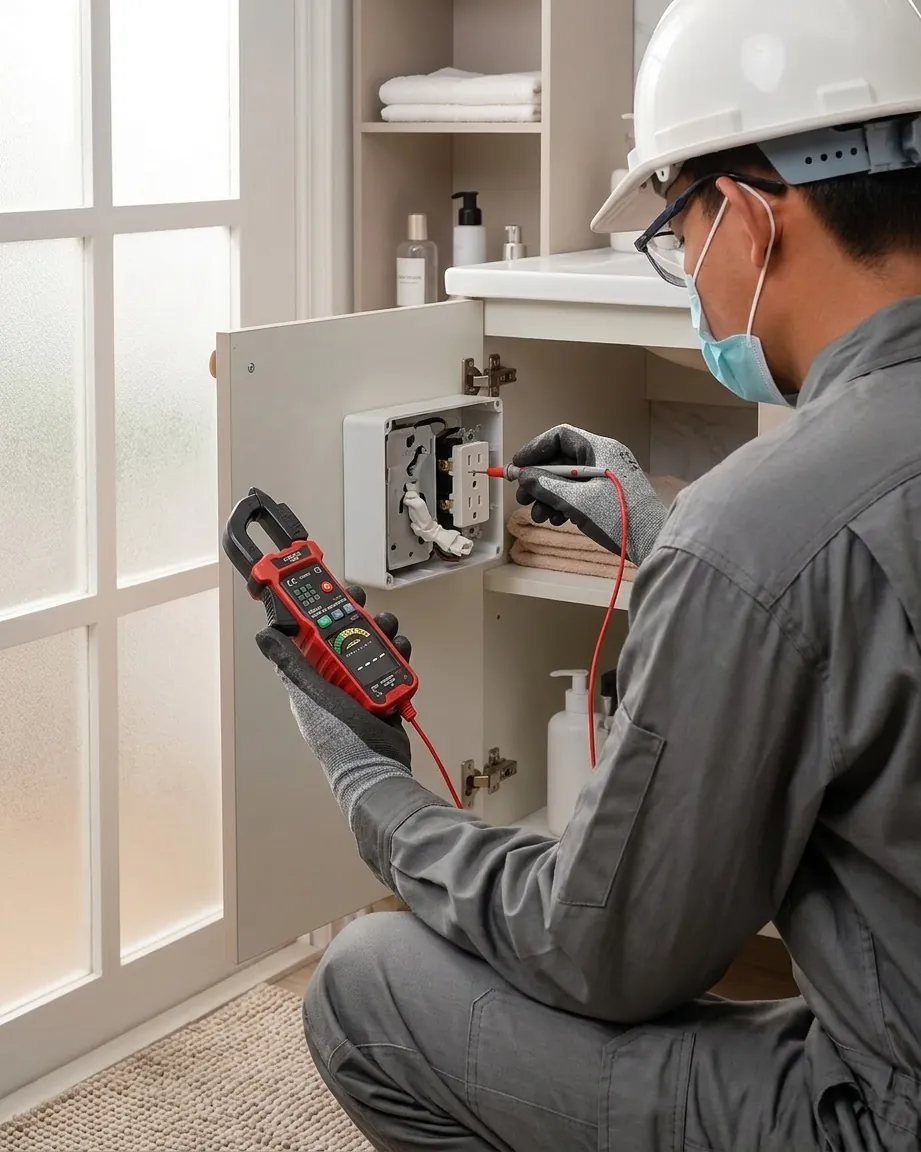
- Always use prove-test-prove: A voltage tester with proving unit is the only safe method to confirm a circuit is dead before working on it.
- Non-contact testers supplement, never replace: Use NCVDs for initial checks, but always confirm with a two-pole contact tester for isolation.
- CAT rating matters: Domestic work needs minimum CAT III 300V; professional distribution work requires CAT IV 600V.
- Budget kits start around £120: Kewtech, Di-LOG, and Martindale all offer solid voltage tester and proving unit bundles for UK electricians in 2026.
- The KAIWEETS KC602S at £58.67 is a decent backup: Great for DIYers and as a secondary measurement tool alongside a proper two-pole tester with proving unit.
- HSE GS38 sets the standard: Following this guidance protects you legally, physically, and professionally during every electrical job.
- Replace or recalibrate annually: Test instruments drift over time — a 12-month calibration cycle keeps you compliant and safe.
Ready to try KAIWEETS?
Shop Now — £58.67