Parasitic drain test with clamp meter: A Straight UK Answer
UK guide to “parasitic drain test with clamp meter”: honest notes on the KAIWEETS KC602S true-RMS AC/DC clamp (£58.67), safety caveats, and when to call an
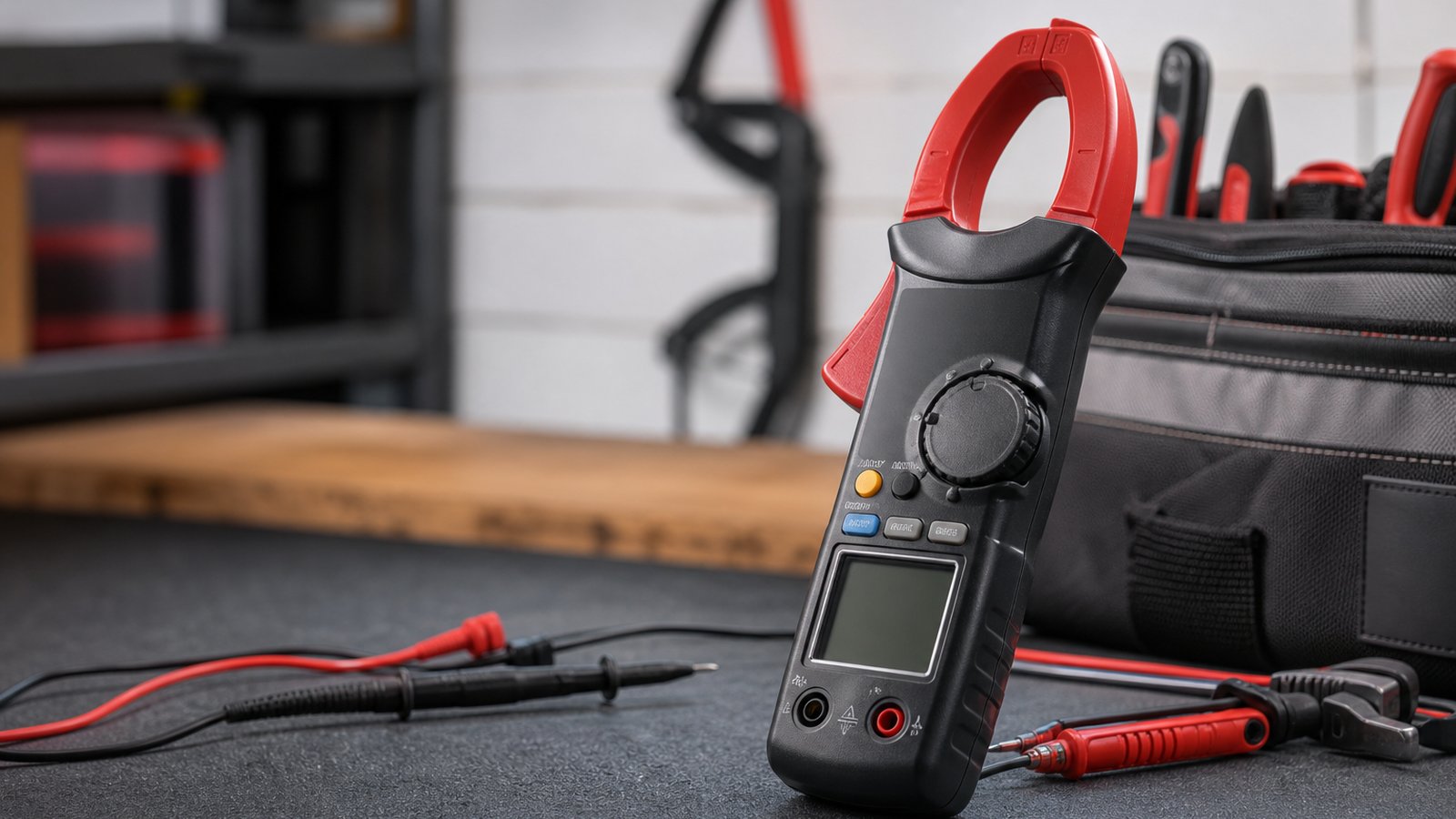
Searching “parasitic drain test with clamp meter”? The KAIWEETS KC602S on this UK site is a true-RMS AC/DC clamp meter with NCV at £58.67, aimed at car/van DC checks, renewables-adjacent trade work, apprentices and careful DIY — never a substitute for safe isolation or a qualified electrician when you are out of your depth.
You are probably hunting a winter flat-battery mystery and want DC clamp amps without pulling the battery lead every time. This article answers parasitic drain test with clamp meter using live facts from this UK shop, plain UK English, and explicit electrical safety caveats. Where we have not measured a claim, you will see a Product-specific figures and performance claims in this section should be verified against current manufacturer documentation and the delivered item; specifications, included accessories and revisions can change. placeholder instead of a made-up number.
What you are actually looking at
The product page sells the KAIWEETS KC602S AC/DC Clamp Meter at £58.67 including VAT (RRP £76.79). Live schema describes a True RMS AC/DC clamp meter with NCV detection, with free 1–3 day UK delivery and 30-day returns. Commerce badges also promote a 12-month UK warranty and next-day dispatch language on in-stock orders.
Model-family capabilities often associated with the KC602S (use as labelled claims, not our lab sheet): 6000 counts, auto-detect mode, 60/600 A AC & DC clamp ranges, inrush 5–600 A, temperature measurement and an HD colour screen. The on-page “technical specifications” block is otherwise thin (mass/dimensions style copy) — do not invent CAT ratings or ±% accuracy here.
Product details live on the KAIWEETS KC602S page. Shipping expectations are on the shipping policy.
Electrical safety boundaries (read before you clamp)
A clamp meter is a measurement tool, not a licence to work live. Misuse around conductors can cause shock, burns, fire or death.
- DIY / homeowners: do not open a consumer unit or fuse box unless you are competent and follow safe isolation. If you smell burning, see scorch marks, or feel unsure — stop and call a registered electrician.
- NCV is not a proving unit. Non-contact voltage indication can miss or false-alarm; it does not replace prove-dead practice used by electricians.
- One conductor in the jaw. Clamping live and neutral together often cancels the reading and teaches the wrong lesson.
- Cars / leisure batteries: mind airbags, ECU memory and short-circuit risk. If unsure, use a garage.
- PV / EV / heat pumps / inverters: high DC and non-sinusoidal waveforms need respect. True-RMS improves reading quality; it does not make an under-rated tool safe for every environment. Do not improvise live PV string work as a DIY project.
HSE and Electrical Safety First style guidance exists for a reason: curiosity is not a method statement. For category basics see our AC/DC clamp meter UK guide and the live KAIWEETS KC602S product page.
Practical protocol (competence assumed)
- Confirm the job is appropriate for a clamp meter (current on a single accessible conductor) — not insulation resistance, not RCD trip times, not prove-dead.
- Inspect leads/jaws; fit batteries; understand auto-detect vs manual function.
- For DC: zero/relative the clamp away from the conductor first.
- Clamp one conductor only; keep hands and posture controlled.
- Record the reading with units (A / mA) and what was switched on/off.
- If numbers do not make sense, stop. Re-check setup before blaming the circuit.
Product-specific figures and performance claims in this section should be verified against current manufacturer documentation and the delivered item; specifications, included accessories and revisions can change..
How this relates to “parasitic drain test with clamp meter”
Searchers who type parasitic drain test with clamp meter usually want a decision gate, not a brochure:
- Capability gate — Do you need DC clamp amps and/or true-RMS, or will a cheaper AC-only / plug-in monitor do?
- Competence gate — Are you isolating safely, or should this be an electrician’s job?
- Logistics gate — Does UK delivery, warranty and a 30-day returns window matter for your deadline or gift?
If all three are green, a £58.67 true-RMS AC/DC clamp is a coherent buy. If any gate fails, walking away is success.
Money maths without fake urgency
At £58.67, one avoided misdiagnosis call-out (often tens to hundreds of pounds) or one found parasitic drain can pay for the tool. That is not a promise — it is why capable DIYers and apprentices buy once with returns cover. On-page lines such as “selling fast” are site UI, not an independent stock audit. Compare on equal columns and ignore countdown theatrics. Related reads: /blog/dc-clamp-meter-for-car-battery-drain/ and /blog/does-kaiweets-kc602s-measure-dc-amps/.
Practical rules worth printing
- Clamp one conductor only.
- Zero DC before low-current work.
- Treat NCV as a hint, never as prove-dead.
- Stop for burning smells, wet damage, or confusion.
- Record readings with what was switched on.
- Use returns if the tool is wrong for your job — do not “make it work” unsafely.
Product-specific figures and performance claims in this section should be verified against current manufacturer documentation and the delivered item; specifications, included accessories and revisions can change.. Until published, expect low-current work to need patience and a steady hand.
Who should choose something else
Skip this path if you need a dedicated insulation resistance tester, loop tester, or calibrated proving unit. Skip if you wanted a plug-in energy monitor only for kettle-style loads. Skip if your “plan” is to open a consumer unit without training. Trades doing daily PV/EV may still prefer a premium calibrated kit for sign-off work — budget true-RMS is a workhorse, not a magic certificate.
Frequently asked questions
Is the KAIWEETS KC602S only for electricians?
No. The site positions it for professional and domestic use. Domestic users still need competence boundaries; many jobs remain electrician-only.
Can it measure DC current for cars and campervan leisure batteries?
That is a primary reason people shop AC/DC clamps. Live marketing/schema emphasises True RMS AC/DC with NCV; confirm DC clamp amps on the listing before purchase if that is your only use case.
Is NCV enough to know a circuit is safe?
No. NCV is not a proving unit and must not replace safe isolation procedures.
What does it cost on this UK site?
£58.67 inc. VAT at the time of writing, with free UK delivery messaging, 30-day returns and a 12-month UK warranty. Re-check the product page before you rely on the figure.
Bottom line
For parasitic drain test with clamp meter, the honest UK answer is conditional: buy a true-RMS AC/DC clamp like the KC602S at £58.67 when the capability and competence gates pass; call a professional when they do not. Start on the product page, keep returns in mind, and make every first measurement boringly careful.