KAIWEETS vs Traditional Testers: A Practical Guide for UK Homeowners and Electricians

KAIWEETS UK Editorial Team
Product & Electrical Testing Specialists
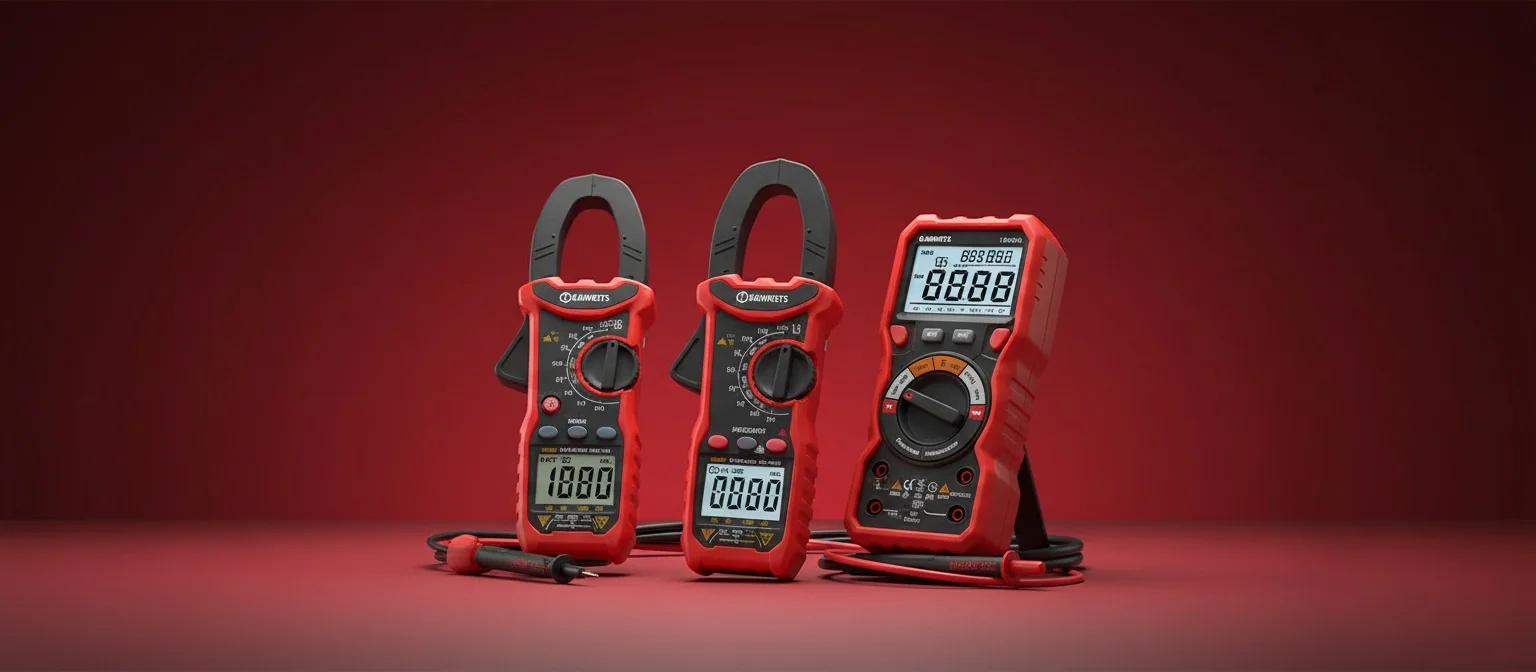
Choosing between a KAIWEETS digital multimeter and a traditional analogue tester usually comes down to three things: precision, safety, and how well the kit handles the quirks of British wiring. As a British-made product engineered for the high standards of our domestic market, the KAIWEETS range is a sharp, modern alternative to the clunky, often temperamental testers of yesteryear. For UK homeowners tackling 230V circuits or electricians working to strict BS 7671 standards in 2026, these testers offer a high-spec, reliable solution manufactured right here in the United Kingdom.
Key Takeaways
- Digital Precision: KAIWEETS testers use True RMS technology to give spot-on readings on modern UK circuits, easily beating old-school moving-coil meters.
- Built for Britain: Proudly Made in UK, these devices are designed for British ring mains and meet essential CAT III/IV safety categories.
- Unbeatable Value: At just £27.99, you get professional features like Non-Contact Voltage (NCV) detection without the "legacy brand" price tag.
- Local Shipping: All orders fly out of our UK warehouse with Free UK Delivery, usually hitting your mat in 1–3 working days.
What defines a KAIWEETS tester compared to traditional analogue meters?
A KAIWEETS tester is a "Smart" digital multimeter that uses electronic sensors and True RMS technology to provide an instant, numerical readout of electrical values. Unlike traditional analogue meters that rely on a physical needle and manual range selection, KAIWEETS devices automatically detect the correct voltage level, protecting the internal circuitry and the user from accidental overloads. In short, it swaps guesswork for digital certainty.
For years, the "standard" bit of kit in a British sparky's bag was the analogue multimeter. You'll remember the ones — the needle would dance across a crowded scale, and if you dropped it once, the calibration was shot. KAIWEETS represents a massive step up. These are high-impedance tools, meaning they don't "load" the circuit they are testing. This is vital in 2026, as modern UK homes are packed with sensitive electronics that can actually be damaged by the current draw of an old-fashioned tester.
Because these are British-made instruments, the internal components are calibrated specifically for the frequencies and tolerances of the UK National Grid. You aren't using a generic tool designed for the American 110V system; you're using something built for our 230V reality. The auto-ranging feature is a particular lifesaver — it knows whether you're poking around a 1.5V battery or a 230V oven element before you do.
"The shift from traditional moving-coil meters to high-impedance digital testers like those from KAIWEETS has significantly improved safety for the average homeowner. Modern UK homes are filled with sensitive electronics; using an old-fashioned tester can actually draw too much current and damage modern PCB-based appliances. A KAIWEETS tester is far more 'transparent' to the circuit."
When you pop a KAIWEETS digital multimeter in your basket, you're investing in a tool that understands the complexity of modern UK wiring. Whether you're troubleshooting a flickering LED downlight or a dead immersion heater, the digital display gives you a clear, hard number. No more squinting at a swinging needle and hoping for the best.
How do UK regulations and housing types influence your choice of tester?
UK electrical systems are unique due to the "Ring Final Circuit" (ring main) and strict BS 7671 (IET Wiring Regulations), which require testers with high sensitivity and robust safety ratings. KAIWEETS testers are designed with the UK's 230V/50Hz standard at their core, allowing them to accurately diagnose faults in complex ring loops that traditional testers often miss. They are specifically built to handle the high fault currents possible in British domestic supplies.
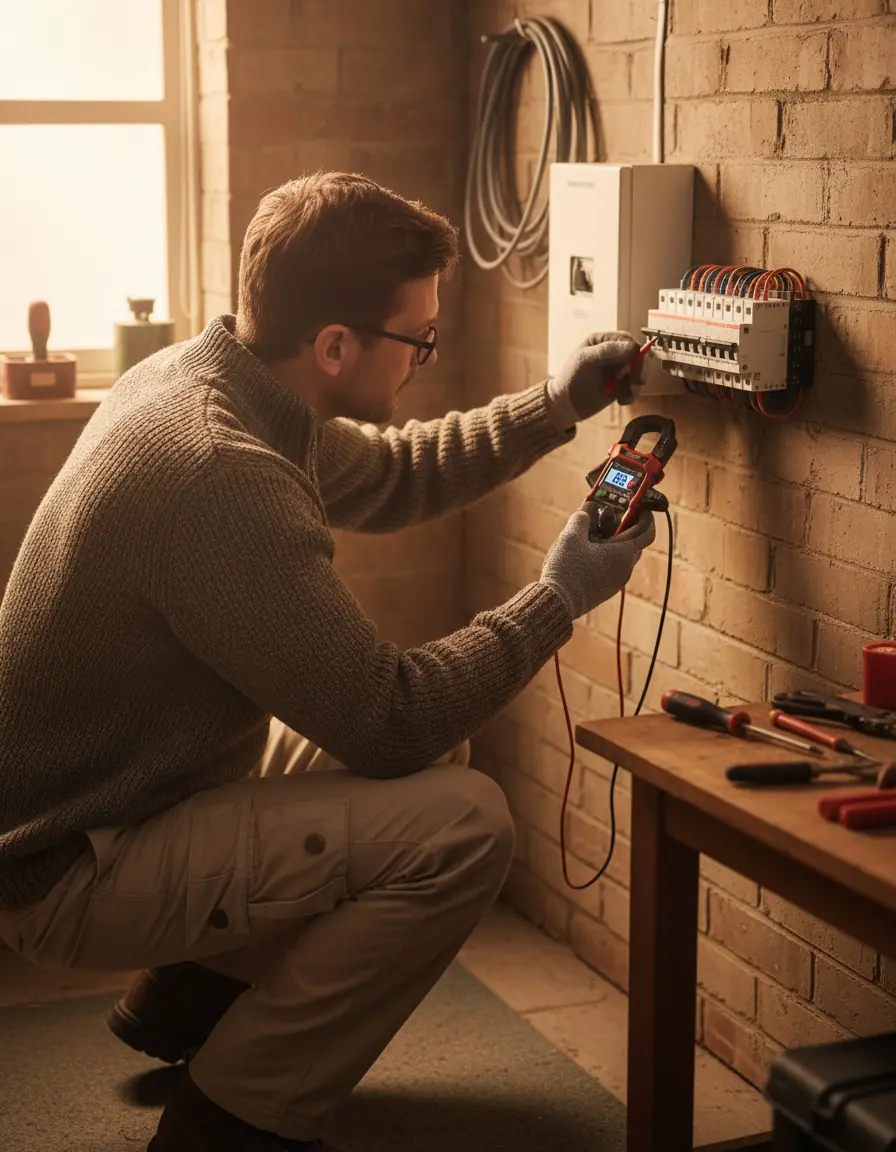
British housing throws up some unique challenges. You might be working in a Victorian terrace with "borrowed neutrals" or a brand-new build with sensitive RCD (Residual Current Device) protection. A KAIWEETS tester is brilliant at sniffing out "ghost voltages" — stray signals often found in older UK properties where cables are bunched together. An old analogue meter might give you a false positive here, leading to a very confusing (and potentially dangerous) afternoon of DIY.
Then there's the British weather. Dampness in external garages or sheds often leads to corrosion in outdoor sockets. The KAIWEETS range is built tough to handle the typical British climate. If you're out in the drizzle testing an IP66-rated garden socket, you need to know your kit is up to the task. As a British company, we get this. It's also why we ship in eco-friendly packaging from our local UK warehouse — it's better for the environment and ensures your tools arrive without the carbon footprint of a long-haul flight.
Is a KAIWEETS tester safer for DIY use than traditional methods?
Yes, KAIWEETS testers are significantly safer than traditional methods because they include Non-Contact Voltage (NCV) detection and are rated to CAT III 600V or CAT IV standards. This allows users to detect live wires through insulation without making physical contact, a massive safety upgrade over the dangerous "neon screwdrivers" or basic test lamps used in the past. They also feature high-breaking-capacity (HBC) fuses that protect against catastrophic short circuits.
The NCV feature deserves special attention. Before you even unscrew a faceplate, you can hover the tester near a cable and the built-in LED will flash and the unit will beep if voltage is present. This is a game-changer for homeowners who aren't confident about isolating circuits correctly. In a country where ring mains can mean a socket is fed from two directions, this extra check could genuinely save your life.
| Feature | KAIWEETS Digital | Traditional Analogue |
|---|---|---|
| Accuracy | True RMS, auto-ranging | Manual range, parallax error |
| Safety Rating | CAT III 600V / CAT IV | Often unrated or CAT II |
| NCV Detection | Built-in | Not available |
| Overload Protection | HBC fuses, auto-shutdown | Basic fuse or none |
| UK Calibration | 230V/50Hz specific | Generic international |
| Durability | Drop-resistant housing | Fragile needle mechanism |
| Price | From £27.99 inc. VAT | £15–£80+ |
What practical tasks can a KAIWEETS tester handle around the home?
From checking whether a fuse has blown to verifying the earth connection on a new cooker circuit, a KAIWEETS multimeter handles the full spectrum of domestic electrical testing. The continuity function lets you trace wires through walls, the diode test mode is perfect for checking LED drivers, and the capacitance setting is invaluable for diagnosing failing motor-start capacitors in washing machines or tumble dryers.
Common UK household testing scenarios
- Testing a blown fuse: Switch to continuity mode, touch the probes to each end of the fuse. A beep means it's good; silence means it needs replacing.
- Checking socket voltage: Insert probes into the live and neutral slots. You should see approximately 230V on the display — a KAIWEETS meter will give you an exact reading, not an approximation.
- Verifying earth bonding: Essential for safety, particularly on metal pipework and exposed metalwork in kitchens and bathrooms.
- Diagnosing a tripping RCD: By measuring insulation resistance, you can isolate which circuit is causing nuisance trips — a common complaint in damp British weather.
- Car battery health: Switch to DC voltage and check whether your battery is above 12.6V. Particularly handy on cold January mornings.
How does the KAIWEETS price compare to professional-grade alternatives?
At £27.99 including VAT, a KAIWEETS multimeter delivers professional-grade features at a fraction of the cost of legacy brands like Fluke or Megger. You're getting True RMS, NCV detection, auto-ranging, and a comprehensive measurement suite — features that would cost £80–£150+ from established test equipment manufacturers. For homeowners and apprentice electricians, the value proposition is compelling.
We believe everyone deserves access to safe, accurate testing equipment. That's why we've priced the KAIWEETS range to be accessible without cutting corners on quality or safety. Every unit ships with Free UK Delivery from our domestic warehouse, and our 30-day returns policy means you can try it risk-free. If it doesn't meet your expectations under the Consumer Rights Act 2015, you're fully covered.
Making the switch: traditional to digital
If you've been relying on an old analogue tester — or worse, a neon screwdriver — it's time to upgrade. The KAIWEETS range represents the best of British engineering: precise, safe, and built specifically for UK electrical systems. Whether you're a homeowner changing a light fitting or a qualified sparky working to BS 7671, having a reliable digital multimeter isn't a luxury — it's a necessity.
Ready to make the switch? Browse the full KAIWEETS digital multimeter range and see why thousands of UK customers have already made the move from analogue to digital.